
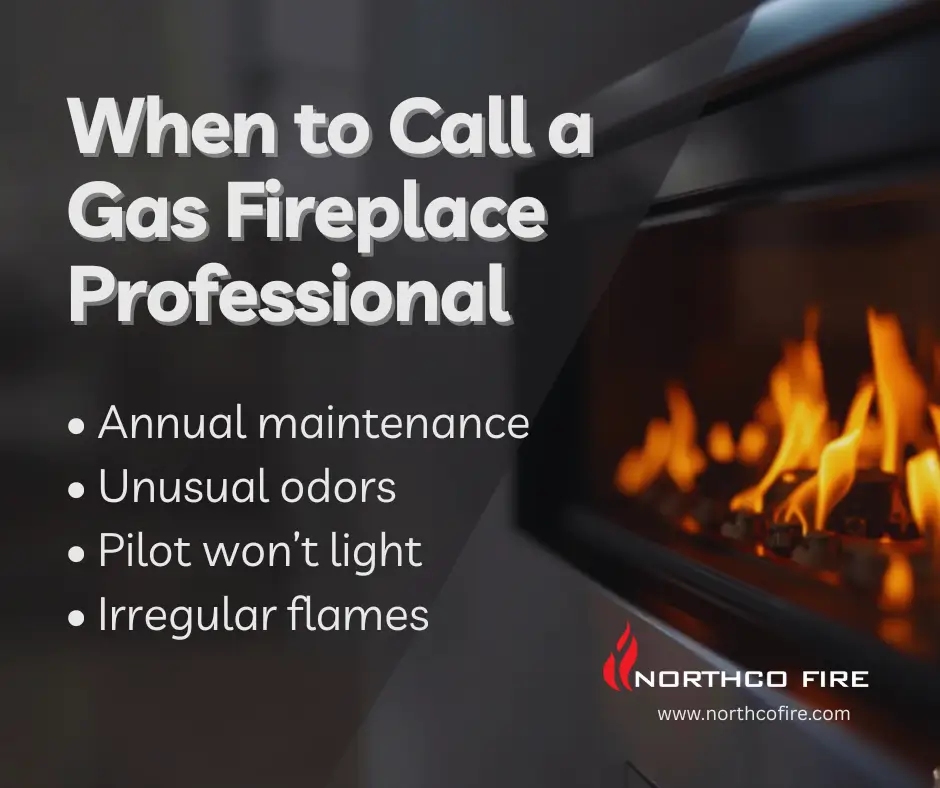
There’s nothing quite like gathering around a warm, glowing fireplace on a cold Colorado evening—but that comfort can quickly turn to danger if your gas fireplace isn’t properly maintained. Gas fireplaces offer homeowners the beauty and comfort of a traditional fire with the convenience of modern technology: no hauling firewood, no messy ash cleanup, and instant warmth at the flip of a switch.
However, while gas fireplaces are designed for efficiency and ease of use, they are sophisticated appliances that require professional attention to operate safely.
Many homeowners assume that because gas fireplaces burn cleanly and require less day-to-day upkeep than wood-burning alternatives, they don’t need regular professional service. This misconception can lead to serious safety hazards.
Gas fireplaces involve combustible fuel, intricate mechanical components, and ventilation systems that must function perfectly to protect your home and family.
Understanding when to call a fireplace professional isn’t just about maintaining your fireplace’s performance—it’s about safeguarding the people you love.
The Hidden Dangers of Gas Fireplace Problems
Gas fireplaces, while generally safe when properly maintained, can pose significant risks if issues go unaddressed. According to the Centers for Disease Control and Prevention, unintentional non-fire-related carbon monoxide poisoning is responsible for approximately 15,000 emergency department visits and nearly 500 deaths annually in the United States.
Carbon monoxide is an odorless, colorless gas that can be produced by malfunctioning gas appliances, including fireplaces with improper ventilation or combustion problems.
Beyond carbon monoxide risks, gas line leaks present another serious concern. Natural gas and propane are highly flammable, and even small leaks can accumulate to dangerous levels. A malfunctioning gas valve, deteriorating connections, or damaged gas lines can all lead to potentially catastrophic situations.
These aren’t problems that homeowners should attempt to diagnose or repair themselves. The stakes are simply too high, and the expertise required to safely work with gas systems demands professional training and certification.
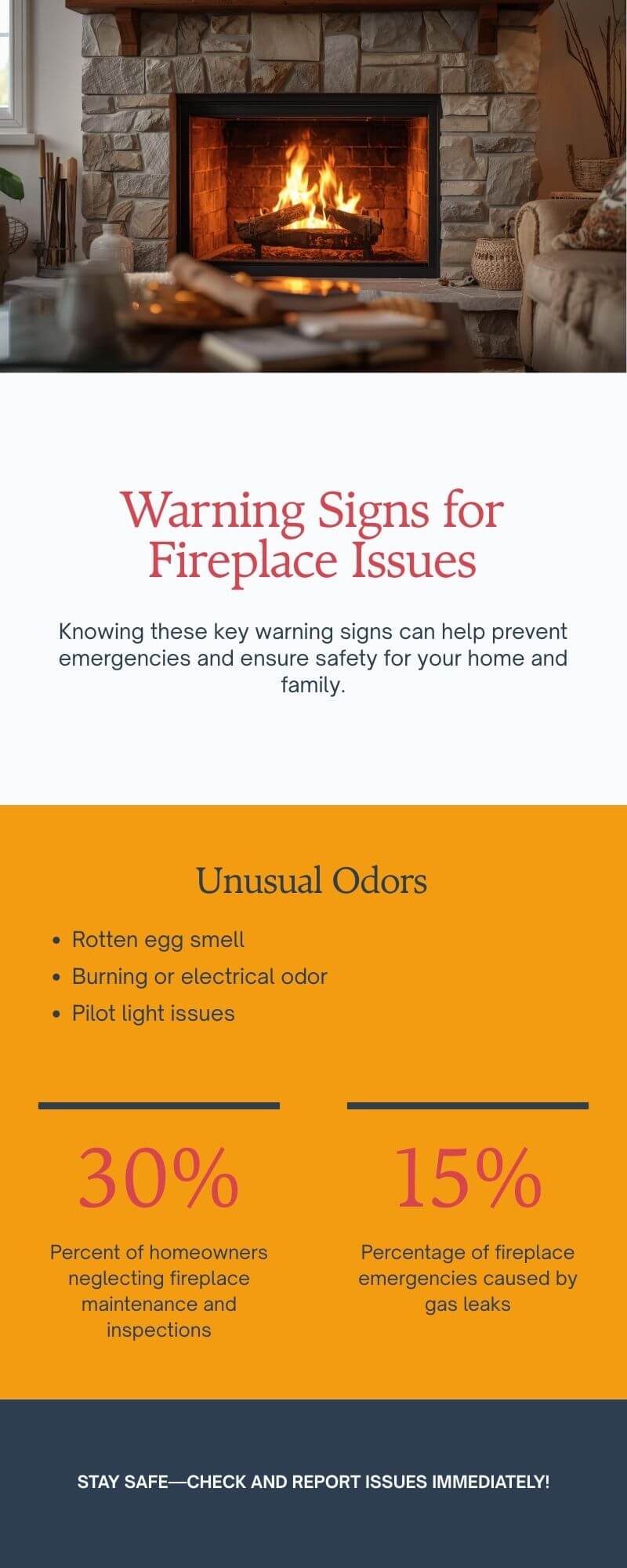
Warning Signs That Require Immediate Professional Attention
Knowing what to look for can help you identify problems before they become emergencies. If you notice any of the following warning signs, turn off your fireplace and contact a professional service technician right away.
Unusual Odors
Gas fireplaces should be relatively odorless during normal operation. If you detect a smell resembling rotten eggs or sulfur, this indicates a potential gas leak. Utility companies add a chemical called mercaptan to natural gas specifically so leaks can be detected by smell. If you notice this odor, evacuate your home immediately, avoid turning on any switches or lighting matches, and call 911 or your gas company’s emergency line from a safe location. A burning or electrical smell can indicate wiring problems or debris burning inside the unit—another situation requiring professional diagnosis.
Pilot Light Problems
The pilot light is a critical component of your gas fireplace’s operation. A healthy pilot light should burn with a steady, primarily blue flame. If your pilot light frequently goes out, burns yellow or orange, or won’t stay lit despite following manufacturer instructions, something is wrong. Common causes include a worn-out thermopile or thermocouple, gas valve blockages, or wiring issues. These components require professional inspection and replacement—attempting to repair them yourself can be dangerous and may void your warranty.
Excessive Soot Buildup
Unlike wood-burning fireplaces, a properly functioning gas fireplace should produce virtually no soot. If you notice black residue accumulating on the glass doors, ceramic logs, or interior surfaces, this signals incomplete combustion—a serious issue that demands immediate attention. Soot buildup typically indicates problems with the air-to-fuel ratio, obstructed ventilation, faulty burners, or improperly positioned logs. Beyond being unsightly, incomplete combustion increases the production of carbon monoxide, creating a direct health hazard for your household. Professional cleaning is essential to address this issue safely and restore proper combustion.
Abnormal Flame Behavior
Pay attention to how your fireplace’s flames look and behave. Flames should be consistent and primarily blue with some yellow tips. If you observe flames that are predominantly yellow or orange, weak or flickering, uneven across the burner, or that produce a lifting or floating appearance, these are indicators of combustion or gas pressure problems. An unbalanced flame often points to issues within the burner system, such as clogged orifices or inconsistent gas pressure—problems that require professional diagnosis and repair.
Strange Sounds
While some operational sounds are normal, certain noises warrant concern. Popping, crackling, whistling, or hissing sounds can indicate problems with the gas supply, chimney blockages, venting system issues, or gas leaks. A hissing sound near gas lines or connections is particularly concerning and may signal an active leak. If you hear unusual sounds, stop using the fireplace and schedule a professional inspection.
Intermittent Operation
A fireplace that turns on and off unexpectedly, fails to ignite consistently, or shuts down during operation indicates a malfunction that needs professional attention. Multiple causes could be responsible: a worn millivolt generator, dirt and carbon buildup near the pilot light, burner jamming, or faulty thermocouple or thermopile sensors. Diagnosing the specific cause requires expertise and specialized equipment.
Northco Fire Serves Northern Colorado
Why Annual Professional Inspections Are Essential
The National Fire Protection Association (NFPA) 211 standard recommends that chimneys, fireplaces, and vents be inspected at least once a year. The Chimney Safety Institute of America (CSIA) echoes this recommendation for all gas fireplaces. These safety standards exist because even fireplaces that appear to be functioning normally can develop hidden problems that pose serious risks. Fire safety begins with prevention, and regular professional inspections are your first line of defense against preventable hazards.
During a professional inspection, a certified technician will examine the gas valve, pilot assembly, and ignition system, perform routine cleaning of the burner and logs, check ventilation systems for blockages or damage, test gas connections for leaks, verify proper flame characteristics and heat output, inspect glass doors and seals for cracks or deterioration, ensure all safety features are functioning correctly, and identify worn components before they fail.
Regular maintenance extends the lifespan of your gas fireplace, maintains energy efficiency, and most importantly, protects your family from preventable hazards. Many manufacturers also require annual inspections to keep warranties valid—skipping this maintenance could leave you responsible for expensive repairs that would otherwise be covered.
What Homeowners Should Never Attempt
While there are minimal tasks homeowners can safely handle—such as occasionally wiping dust from the exterior glass when the unit is completely cool—the vast majority of fireplace maintenance and all repairs should be left to certified professionals. Gas fireplace systems involve combustible fuels, electrical components, and precise calibrations that require specialized training to handle safely.
Never attempt to adjust gas valves or connections, repair or replace thermocouples, thermopiles, or ignition systems, modify ventilation or flue components, reposition or replace ceramic logs without professional guidance, or work on any component while gas is flowing to the unit. These activities can result in gas leaks, fires, explosions, carbon monoxide exposure, or damage to your fireplace that creates ongoing safety hazards. A qualified fireplace professional has the training, tools, and experience to perform these tasks safely and correctly.
Protecting Your Home: Carbon Monoxide Safety
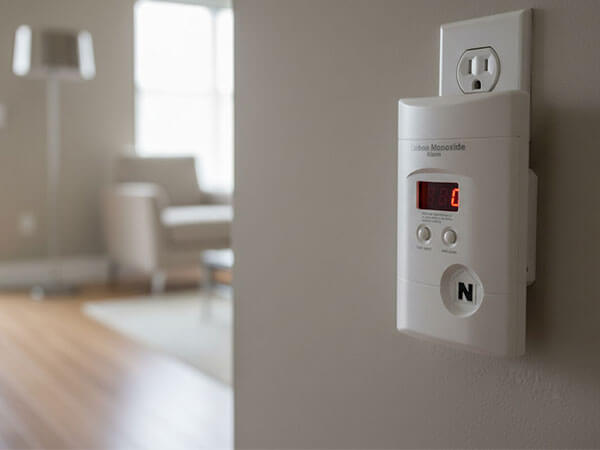
Carbon monoxide is often called the “silent killer” because it cannot be seen, smelled, or tasted. Symptoms of exposure—including headaches, dizziness, nausea, and confusion—can easily be mistaken for the flu. Prolonged exposure can lead to unconsciousness and death. Every home with a gas fireplace should have carbon monoxide detectors installed on every floor and near sleeping areas. Test these detectors monthly and replace batteries twice yearly.
If your carbon monoxide detector activates, or if anyone in your household experiences symptoms of CO poisoning when the fireplace is in use, evacuate immediately, get to fresh air, and call emergency services. Do not re-enter the home until it has been inspected and cleared by professionals.
Trust the Experts at Northco Fire
Since 2012, Northco Fire has been providing exceptional gas fireplace service and our dedication to customer satisfaction has earned us the title of one of the most reputable fireplace service companies.
We understand that each fireplace is unique, and our expert technicians are equipped to service and repair all models of gas fireplaces with the care and attention your home deserves.
Our comprehensive service approach includes dismantling, inspecting, and cleaning all system components while verifying proper installation and operation.
We conduct thorough safety checks including gas leak detection and ventilation verification, ensuring your fireplace meets current safety standards. With transparent pricing and a customer-centric approach, you’ll know exactly what to expect.
Don’t wait for a small problem to become a dangerous situation. Winter is peak season for gas fireplace issues—schedule your inspection now before the cold weather rush. If your gas fireplace hasn’t been professionally inspected recently, contact Northco Fire today.
Our goal is to ensure that your fireplace not only functions properly but also brings warmth, comfort, and peace of mind to you and your loved ones for years to come.